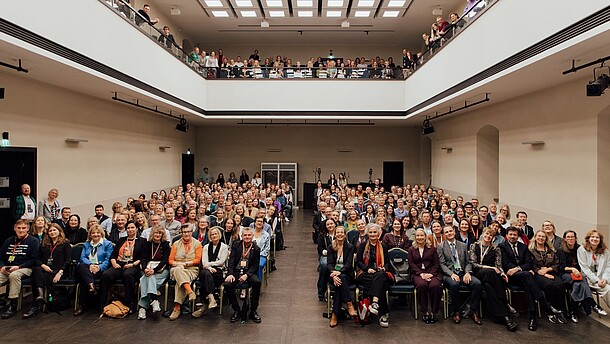



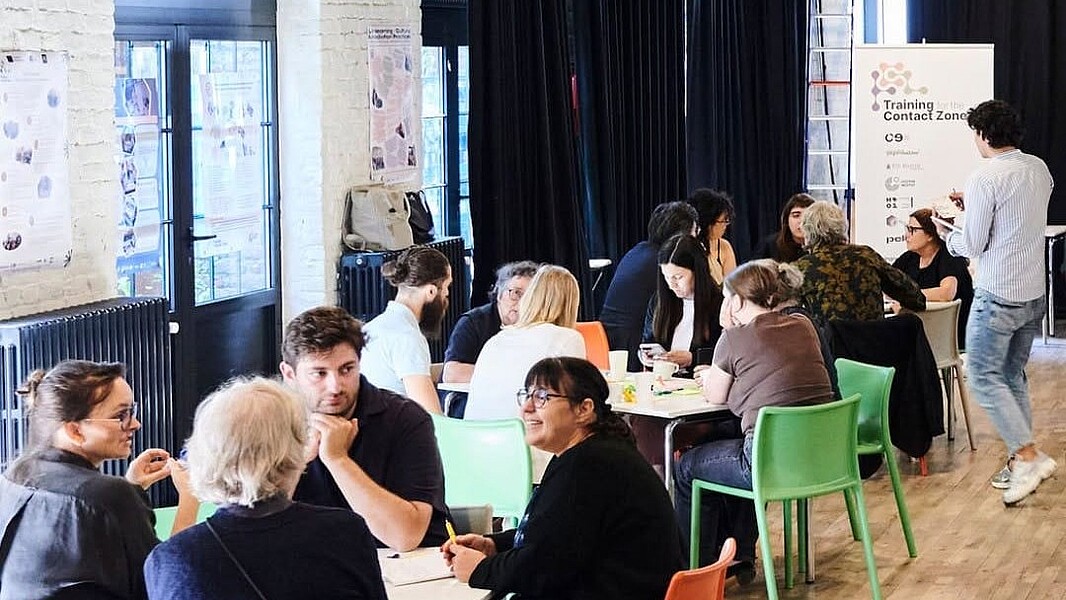
Representing NEMO, Executive Board member Sergio Servellón joined the workshop “Where Does the Contact Zone Live?” on 3 July. The session brought together cultural network representatives and partners of the Training for the Contact Zone project to explore how Contact Zone approaches can be applied across different sectors, organisations and communities.
Organised in a World Café format, the workshop encouraged participants to exchange experiences and reflect on how dialogue-based and participatory practices can take root in diverse contexts. NEMO was invited specifically to contribute the museum perspective to these discussions, highlighting the role museums can play as spaces for participation, dialogue and cultural exchange. By participating in the workshop, NEMO contributed to broader conversations on how museums can support cultural democracy and provide spaces where different perspectives can meet, be heard and be negotiated through dialogue.
- Learn more about the Training for the Contact Zone project
- Learn more about the event
- Access the recordings
Culture, dialogue and participation
The conference marked the final event of the Training for the Contact Zone project, which has developed and tested a training curriculum to help cultural and heritage professionals create participatory formats where different, and sometimes conflicting, perspectives can be expressed and negotiated.
At a time of growing polarisation and social fragmentation, participants explored how cultural, educational and civic institutions can foster dialogue, strengthen cultural belonging, and create spaces where people can not only access culture but also shape it. Discussions also considered the conditions needed to sustain such participatory practices, including policy support, funding and cross-sector collaboration, and how the project's findings could inform future European cultural policy.