As a strategic partner of the Balkan Museum Network, NEMO supports the conference's mission to strengthen collaboration, peer learning and exchange among museum professionals across the Balkan region and beyond.
Looking to the future through "museum chronoscopes"
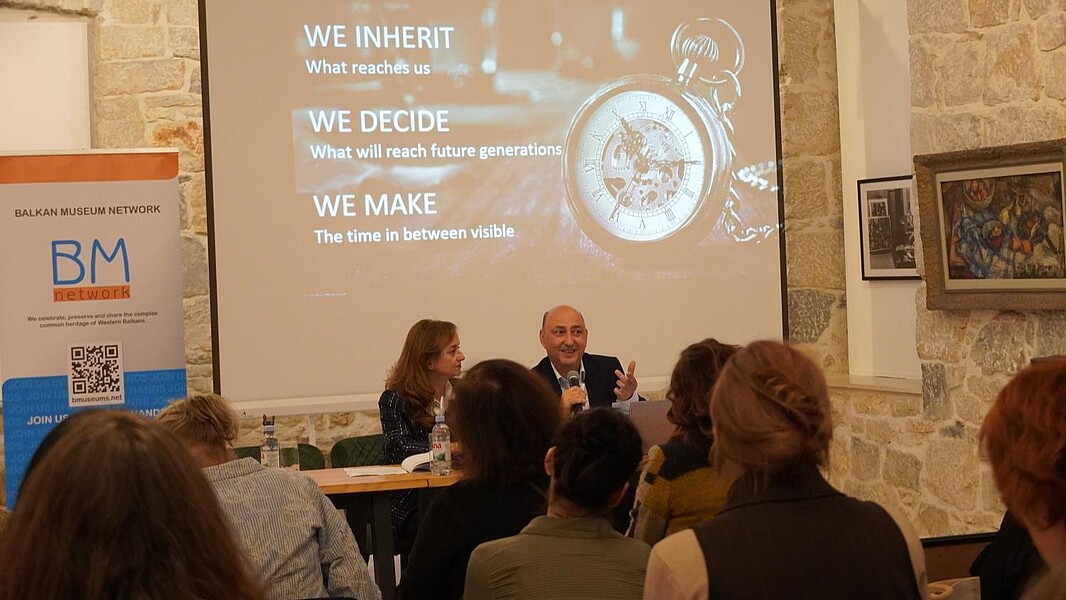
In his keynote, “Museum Chronoscopes: Pages from the Everyday”, Sandro Debono explored how museums can develop tools for thinking about and shaping the future.
Drawing inspiration from H. G. Wells' famous concept of the time machine, Debono reflected on how museums have long excelled at helping society understand the past through collections, archives, research, conservation and documentation. If museums have developed sophisticated ways of looking backwards in time, what tools can help them navigate the future?
To address this challenge, he introduced the concept of "museum chronoscopes": conceptual instruments that encourage museum professionals to look backwards from imagined futures and recognise how today's decisions, priorities and working methods already shape what museums may become tomorrow.
A conference built on peer exchange
Held on 28–29 October 2026 at the Museum of Herzegovina in Trebinje, “Meet, See, Do” celebrated its tenth edition this year.
Organised by the Balkan Museum Network, the conference is designed as a collaborative, peer-to-peer platform where museum professionals share experiences, challenges and ideas. Participation is free of charge and open through an international call, creating opportunities for early-career professionals, freelancers and colleagues from under-resourced institutions to learn from one another.
This year's discussions focused on ethics, participation, sustainability and care, while also addressing broader challenges facing the sector, including funding pressures, organisational development, accessibility, inclusion and regional cooperation.
- Learn more in the conference booklet