


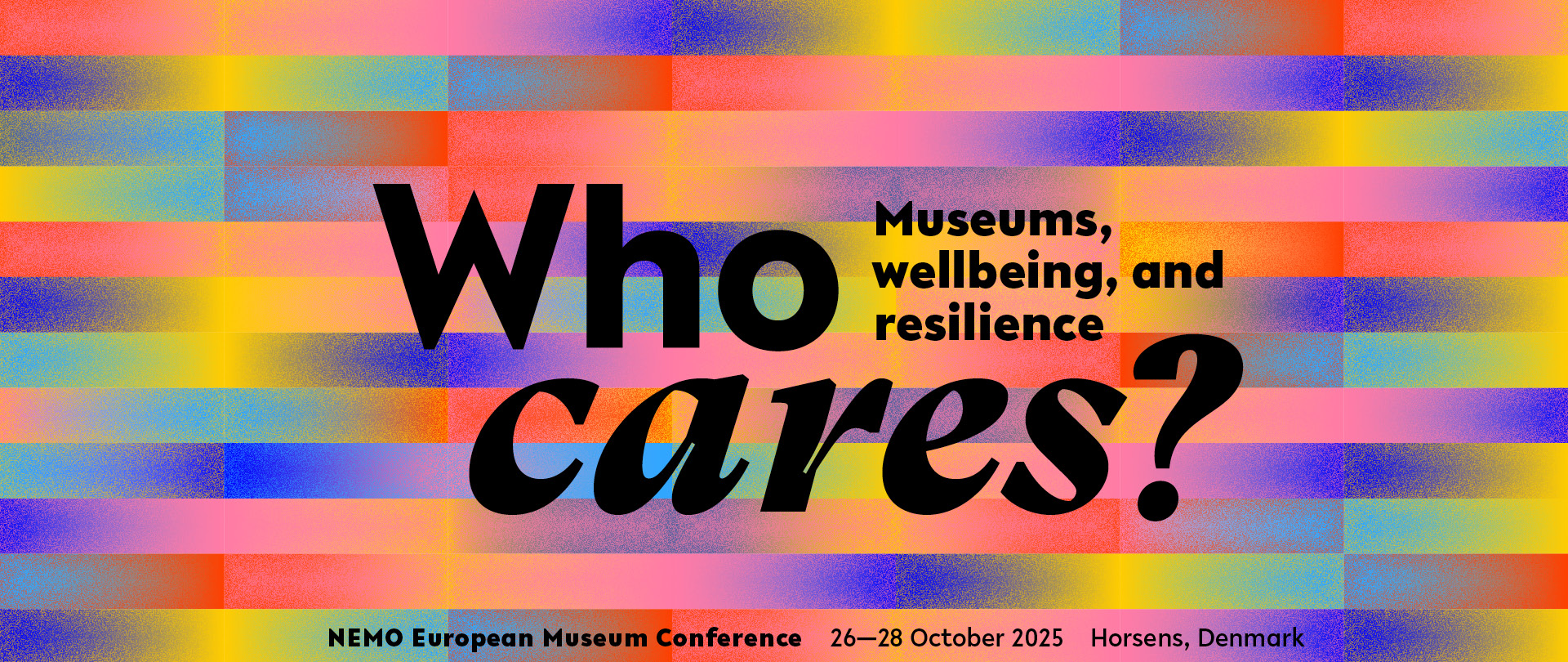
NEMO's European Museum Conference 'Who cares? Museums, wellbeing, and resilience', took place from 26-28 October 2025. In Horsens, Denmark, we brought together 327 museum professionals, cultural practitioners, and cross-sector experts from 37 countries for three days of inspiration, exchange, and connection. Keep scrolling for the main outcomes, recordings, photos, resources, and a special podcast episode.
'Who cares? Museums, wellbeing, and resilience' explored the transformative role of museums in supporting mental health, wellbeing, and community resilience. As museums increasingly embrace their potential as spaces for emotional healing, social connection, and therapeutic experiences, the European museum conference highlighted inspiring case studies and innovative approaches that position museums as active contributors to public health.
We examined how partnerships between the cultural and healthcare sectors are shaping new approaches, reflecting a broader movement to integrate arts and culture into health initiatives, fuelled by growing recognition of the positive impact creative environments can have on mental wellbeing. We also discussed the role of museums in supporting youth mental health, and addressed the importance of self-care and resilience within the museum sector itself.
NEMO statement
Developed, informed by and endorsed during the conference by NEMO’s Executive Board, this statement outlines NEMO’s position on integrating museums into health and social policy across Europe. It affirms our ongoing commitment beyond the conference to recognising museums as vital components of civic care systems, and calls for their structural inclusion in public-health strategies. The statement also highlights the importance of intersectoral collaboration, social prescribing, and evidence-based approaches to embedding wellbeing into museum practice and policy.
Read the full statement below, also available as pdf.

Revisit the conference
To relive, or experience for the first time, the NEMO European Museum Conference 2025, check out the photos and listen to the special episode of the Art Engager podcast.
Find more details about the conference, programme and outcomes in our Day 1 and Day 2 summaries.


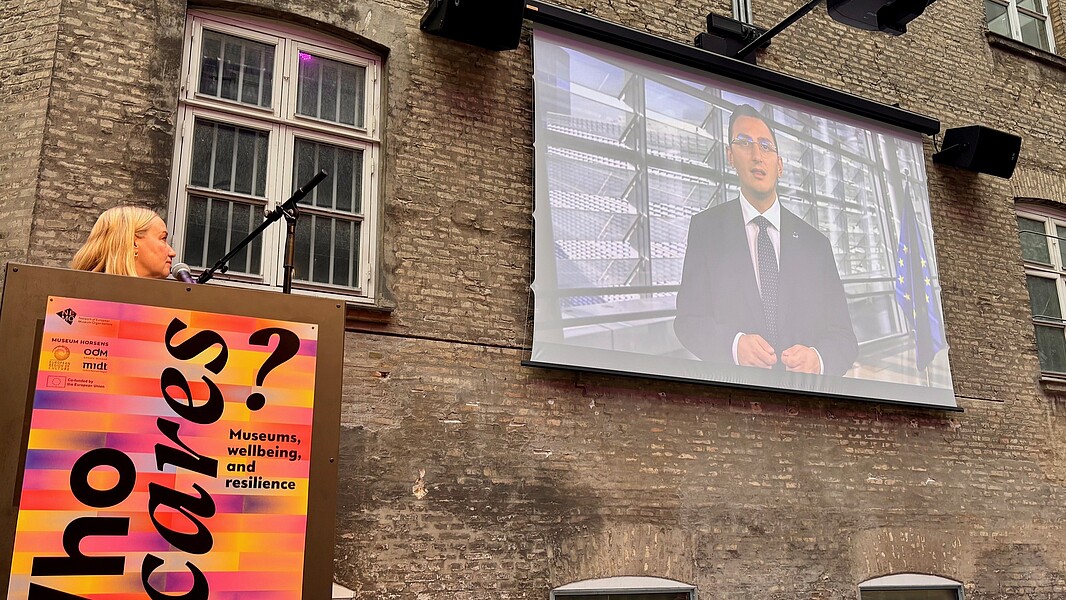


Recordings
In the keynote speech, Elizabeth Merritt, Vice President for Strategic Foresight and Founding Director, Center for the Future of Museums at the American Alliance of Museums, explored how museums are increasingly stepping into roles as providers of care. As traditional support systems face erosion, especially in the USA, Elizabeth envisioned futures where museums become integral to new infrastructures of wellbeing, partnering with health services to meet community needs.
-
Examples and related research cited in the talk
Museums integrated into the Internet of Things
Use of smart watches and wearable fitness trackers is growing and biometric surveillance is becoming ubiquitous for retail and for security. How might museums plug into the internet of connected devices and pooled data in order to track their impact, and provide personalised recommendations for health and wellbeing?
- Real-time Multi-CNN-based Emotion Recognition System for Evaluating Museum Visitors’ Satisfaction, Kwon and Yu, ACM Journal on Computing and Cultural Heritage, Volume 17, Issue 1
- eMotion: Mapping the Museum Experience project.
- Tech Interactive (formerly the Tech Museum of Innovation) San Jose, California, Body Metrics Exhibit
- Send Me SFMOMA, an SMS service that provided an approachable, personal, and creative method of sharing the breadth of SFMOMA’s collection with the public (2017-2020).
The Place-based, Person-centric Museum
With formal systems of health care frayed, many people do not have access to insurance-subsidised health maintenance or support services. More and more often, people are referred to AI-mediated health services, which, which some people don’t trust, and leave most people yearning for human connections. In this future, museums become normalised as places of community, support well-being.
- Front line staff trained to attend to the emotions/health of visitors, offer support
- Check out a personal musician Museum Soundtrack, Hammer Museum (2010)
- Art-o-mancy, an experiential game that creates a new relationship between museums and museum-goers (2014). - Maybe have a museum health/wellbeing consultant on staff
- Louisville Zoo Walking Club
- Yoga in the Galleries, North Carolina Art Museum
- Mindfulness Meditation, Rubin Museum of Himalayan Art
- Picture of Health, Museum of Fine Arts, St. Petersburg: a wellness initiative that “harnesses the power of the museum’s collection and gardens as places to enhance wellbeing and find healing and solace.” - Programming
- Drumming classes, part of creative aging programsgroup at the Louisiana State Museum.
- Group Therapy, Frye Art Museum, an exhibit and associated programming exploring strategies of alternative medicine, psychotherapy, and the wellness industry.
- Reflections: A Program for People with Dementia and Their Care Partners, Nasher Museum of Art at Duke University.
Museums integrated into social systems of health
To create lasting change, new ways of operating need to be integrated into new systems. A whole-of-society approach to health and wellbeing would fold museums into an infrastructure that includes the formal health care system, education, and public spaces.
- School trips that are not just for teaching content, but for learning how to use the museum for self-care: Empathy Tours at the Minneapolis Institute of Art
- Normalising prescriptions for health from physicians: Musee Des Beaux Arts Montreal.)
- Museums as training grounds for physicians: Art of Examination, Denver Museum of Art
- Integrating museum collections into medical therapy: occupational therapy and stroke rehabilitation, University of Cambridge Museums and Botanic Garden.
- Hospitals with art exhibits and galleries: Montreal Children’s Hospital art installations.
- Public Spaces with accredited museums: The SFO (San Franciso Airport), an AAM accredited museum with 165 pieces of public art, and, at the moment, 22 exhibitions on a variety of topics from aviation, to the history of the telephone, and Women of Afrofuturism.
The panel Collective care: Museums, communities, and the practice of wellbeing, moderated by Sandro Debono, NEMO Board member, showed how museums across Europe are engaging in cross-sector collaborations to support wellbeing. Mia Lejsted Bonde, Ovartaci Museum, described a holistic approach that integrates art created by individuals with mental health challenges, offering inclusive creative workshops for vulnerable groups. Roberto Casarotto, Aerowaves, shared innovative dance programmes designed for people with Parkinson’s, teenagers facing psychological challenges, and cancer survivors. All highlighting the power of movement and art in healing. Sinéad Rice, National Gallery of Ireland, presented the Gallery’s journey towards embedding care as a structural and ethical value, culminating the Cultural Art Psychotherapy programme ‘No Words’, co-created with marginalised communities.
The session Deep dive: Rethinking care in trauma-informed museums, moderated by Paulina Florjanowicz, Polish National Institute for Museums. Jolien Posthumus returned to explore how trauma-sensitive mindfulness and art can foster healing and resilience. Yurii Horpynych and Maryna Bohush from Ukraine’s National Museum of the History of Ukraine in the Second World War shared their cultural rehabilitation programme for war-affected communities, demonstrating how museums can support psychosocial recovery and reintegration.
The panel Caring collaborations across sectors: From inspiration to infrastructure, moderated by Nils Fietje, WHO – World Health Organisation, brought together perspectives from cultural and healthcare sectors to explore how partnerships can evolve from inspiring projects into sustainable infrastructure.
Helen Chatterjee, University College London, joined digitally to share insights into how cultural initiatives, especially in museums, can enhance wellbeing and reduce inequalities through evidence-based integration into health systems. Inga Surgunte, Latvian Academy of Culture, highlighted the opportunities and challenges of museum and health sector collaborations, stressing the need for supportive policies and sustainable frameworks. Pia Wiborg Astrup, Region Midtjylland, emphasised the importance of embedding cultural health initiatives into long-term healthcare strategies to address demographic and mental health challenges.
The panel Building resilience – Toward a culture of care, moderated by Vera Carasso, NEMO Board Member, gathered voices from museums, academia, and the creative sector to share strategies for embedding care into organisational cultures.
Lisette de Jonge (LEGO Group) shared data-driven approaches to workplace wellbeing and leadership cultures that prioritise care. Josefa Kny, betterplace-lab, joined digitally to present findings from research on making organisational resilience tangible in non-profit networks. Nuala Morse, University of Leicester, explored the implications of museum professionals delivering health programmes and the need to support their wellbeing. Ana Acosta, Casa Batlló, described how non-violent communication and inclusive structures have transformed staff wellbeing and deepened institutional resilience.
Resource hub on wellbeing
We have gathered resources that were mentioned by our speakers at the conference. We’re also adding other helpful resources on wellbeing and museums. Feel free to reach out to office@ne-mo.org if you would like to make an addition.
Reports
- Culture and health - Time to act (European Commission’s Open Method of Coordination (OMC) Group on Culture and Health)
- Wellbeing Guidance: Creating a culture of care for museums and community partners (UK Museums Association)
- Keeping Safe report: a review of psychosocial and wellbeing support options for creative practitioners working with challenging conditions and circumstances (Arts Council)
Scientific reports
- Mindfulness meditation training alters stress-related amygdala resting state functional connectivity: a randomized controlled trial(A.A. Taren et al) (mentioned in presentation of Jolien Posthumus)
- Contemporary artworks as transformational objects in art psychotherapy museum groupwork (Elisabeth Ioannides, Aphrodite Pantagoutsou, Helen Jury )
- Museums as Therapeutic Environments and the Contribution of Art Therapy (Elisabeth Ioannides)
- The Physiological Impact of Viewing Original Artworks vs. Reprints - A Comparative Study (Courtney Worrell1, Madeline Kirkpatrick1, Camila Ribeiro Perez1, Pierette Fortuna1, Leyla Bumbra, Lucy Bradnock, & Anthony J. Woods)
Guides
- Arts on Prescription in the Baltic Sea Region – Online Guide (Interreg Baltic Sea Region) (mentioned by Inga Surgunte)
Books
- Norman Farb and Zindel Segal, “Better in Every Sense: How the New Science of Sensation Can Help You Reclaim Your Life” – listen to an introduction here (mentioned in presentation of Jolien Posthumus)
- Julie Rodeyns and Wouter Bouchez, “Through Art We Care” - website
- Dr. Nuala Morse, “The Museum as a Space of Social Care” - information
Other Resource Hubs:
Projects
- Happy Place explores how young adults wellbeing can be improved by their engagement with museums, their stories and spaces. (Learn more in a blog post)
- Art on Prescription at the EMΣT | The National Museum of Contemporary Art Athens
- Companionship with Contemporary Art - EMΣT | The National Museum of Contemporary Art Athens brings elderly people and people with difficulties with mobility into contact with art
- ΕΜΣΤ Without Borders - Aims to allow equal access to art for all, to eliminate social exclusion and the social inclusion.
Supported by