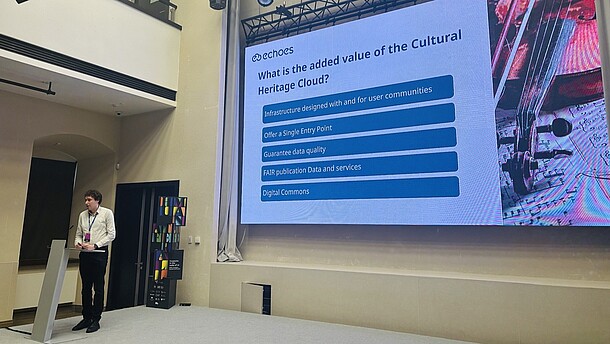
The conference in Vilnius brought together more than 300 museum professionals from 40 countries to explore how AI is transforming museum practice and society. the future implications of AI on museums and society are unknown. Right now, the fast-developing technology is felt by museum professionals on the whole emotional spectrum, from anxiety and fear to curiosity and excitement.
To guide the path forward, the NEMO Executive Board has published a statement on museums and AI, including the following recommendations:
- Encouraging the sector to develop clear policies, guidelines and a shared understanding of the ethical use of AI.
- Urging policy makers to recognise museums as essential actors in European AI policy and as key partners in building AI literacy, fostering critical thinking and strengthening social trust.
- Highlighting the growing risks posed by cyberattacks, disinformation and the manipulation of digital heritage, and calls for greater awareness of museums' role in societal resilience. As society’s most trusted institutions, museums are great assets but at the same time targets.
Read the full statement below, or download it as a pdf. We encourage museums, policymakers and cultural heritage professionals to share and engage with its recommendations.
Together, we can help shape an AI future that is ethical, democratic and in service of society.
NEMO European Museum Conference 2026 "Human after all: Museums in the wake of AI": Statement of the Executive Board
“This year’s NEMO European Museum Conference “Human after all: Museums in the wake of AI” in Vilnius, Lithuania, brought together over 300 delegates from 40 countries to explore how museums across Europe are responding to the challenges and opportunities of artificial intelligence. The discussions and case studies made one thing clear: the implications that AI will have on museums and society at large remain unknown. Conference participants examined how big tech is shaping our understanding of AI and how its applications and technical deployment, driven by commercial and political agendas, will have a direct impact on European societies for years to come.
The conference offered a stocktake of where museums stand, acknowledging the challenges and opportunities of a new, fast-moving technology that is unevenly understood and can, on the one hand, cause anxiety and on the other spark a feeling of curiosity. To guide the path forward, NEMO encourages the sector to develop clear policies, guidelines and a shared understanding of the ethical use of AI. Leadership is key in this respect.
As society’s most trusted institutions, museums can be safe, open spaces in the AI debate, helping to build AI literacy, strengthen social trust and equip citizens to question the systems that shape their lives. That same trust, however, makes museums a target. Cyberattacks, corrupted collection data, political instrumentalisation and disinformation threaten to erode confidence in cultural institutions today. On the other hand, museums and other civil society organisations will become increasingly important pillars of social resilience systems as our societies face growing disruption, uncertainty and polarisation.
As museums work at the intersection of authenticity and research, NEMO calls for their recognition as essential actors in European AI policy. They are trusted partners in helping society understand and critically reflect on developments of AI and their collateral effects, such as the increase of mistrust in society, fake news and polarisation.
Embracing change as the only constant, NEMO supports its members and the European museum sector at large helping them to build the understanding and capacity to be agile in disruptive times without losing what defines a memory institution: the ability to remember and to reflect on the present and the future."
The NEMO Executive Board, 20 October 2026