


Through visits to the Salzburg Open-Air Museum, Museum der Moderne Salzburg, KunstHausWien - Museum Hundertwasser, Architekturzentrum Wien and discussions with representatives of Austria's Federal Ministry responsible for the Ecolabel, participants gained first-hand insights into how sustainability can be embedded into all areas of museum work.
NEMO Working Group SAC Study Visit: What can museums learn from Austria’s sustainability journey?


© Image: Mareen Maaß
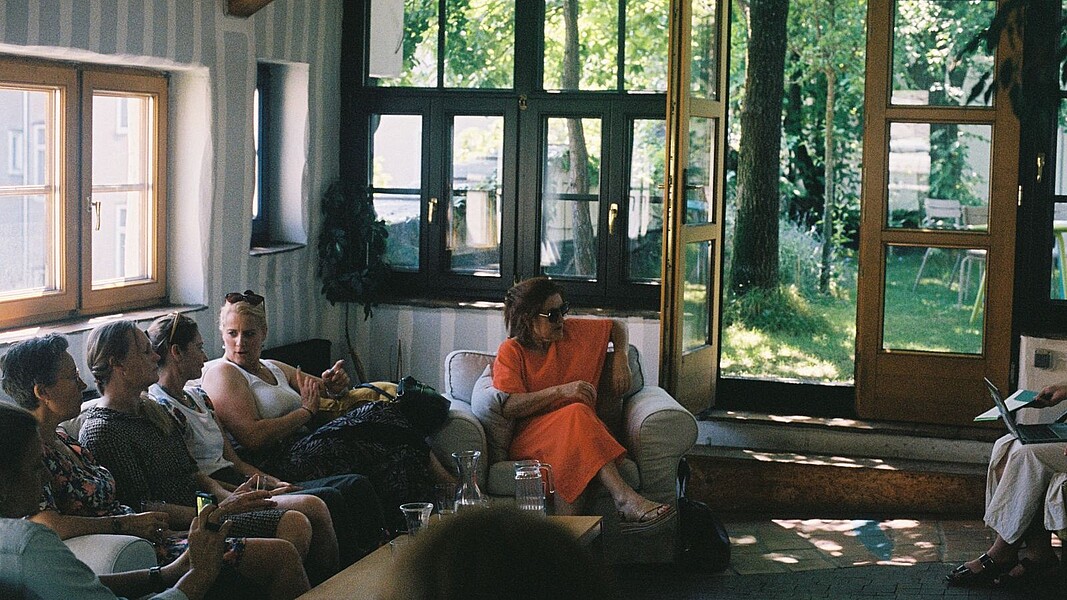

The study visit highlighted a number of key questions currently facing museums across Europe.
How can sustainability move from individual projects to institutional change?
One of the strongest takeaways was the role of the Austrian Ecolabel as a practical framework for driving long-term transformation. Participants highlighted that ecolabels not only provide clear guidance and measurable goals, but also recognise and legitimise the work of museum professionals leading sustainability efforts within their institutions.
For many attendees, the Austrian model demonstrated how certification schemes can help museums maintain momentum, structure decision-making processes, and turn sustainability from a collection of isolated initiatives into an institutional commitment.


How can museums learn from each other?
Across all site visits, participants encountered diverse approaches to sustainability. Discussions ranged from biodiversity and visitor mobility at the Salzburg Open-Air Museum, to sustainable exhibition production and material reuse at Architekturzentrum Wien, and the integration of sustainability into programming, operations, and organisational culture at Museum der Moderne Salzburg and KunstHausWien.
A recurring finding was that there is no single model for sustainable museums. Instead, sustainability is expressed through many interconnected practices. Participants particularly valued the opportunity to hear directly from professionals who are embedding sustainability into their daily work. The diversity of institutions and approaches showed that peer exchange remains one of the sector's most powerful tools for accelerating change.
Beyond practical examples, the visit encouraged reflection on how museums can strengthen cross-sector collaboration and adapt successful initiatives to their own national and institutional contexts.

The study visit reaffirmed that sustainability is no longer a peripheral topic for museums. Rather, it is becoming a core strategic question that touches governance, operations, exhibitions, collections, and public engagement alike. Austria's experience demonstrated that clear frameworks, institutional commitment, and knowledge exchange can help museums translate ambition into action.
NEMO's active Working Groups
Also interesting
From 9-10 October 2026, members of NEMO's Working Group Digital Transformation gathered in Riga, Latvia, for a two-day study visit hosted by the Latvian Museum Association. Bringing together museum professionals from across…
NEMO has joined more than 200 cultural organisations from across Europe in signing an open letter calling on EU Member States to reverse proposed cuts to the Creative Europe programme in the 2027 EU budget. Initiated and…
In September 2026, NEMO and BAM! Strategie Culturali brought together museum professionals from across Europe for the three-part online training “Managing change: A digital transformation lab for museum professionals”.