
Active learning and exchange at NEMO’s European Museum Conference

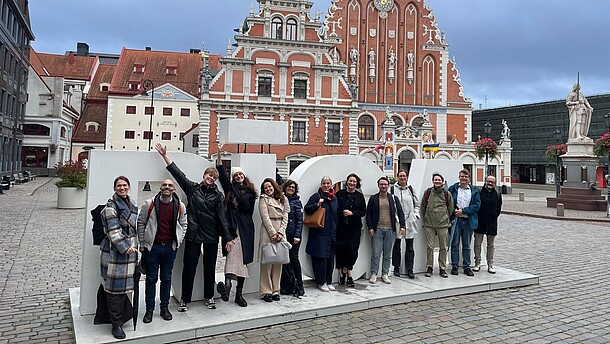
© ASTRA Museum, Image: Silviu Popa

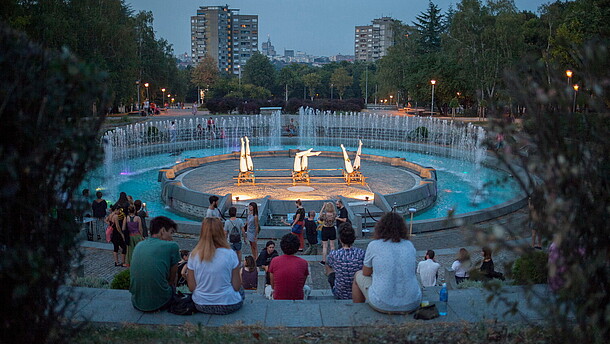
© ASTRA Museum, Image: Silviu Popa

At this year’s NEMO European Museum Conference, we are placing special emphasis on hands-on learning and inspiring exchange through small-group workshops and sessions. Learn below what you can expect in Horsens, Denmark, from 26-28 October 2025.

The workshops and other breakout sessions at the NEMO European Museum Conference ‘Who cares? Museums, wellbeing, and resilience’ offer excellent opportunities for practical skill-building and in-depth discussion in a more intimate setting. They invite participants to explore how museums can foster mental health, organisational wellbeing, youth engagement, cultural value, and emotional resilience - both within their own institutions and in the communities they serve.

Across the programme, you will find creative methods, collaborative approaches, and inspiring conversations that connect theory with practice. Whether you are looking to design more inclusive experiences, address urgent social and environmental challenges, experiment with AI, or explore new forms of care in museums, these sessions aim to equip you with tools, inspiration, and renewed energy for your work.

  • Explore the workshops in detail below by clicking the arrows, and sign up for your favourites in the conference registration form.

Some workshops are already fully booked, so if you are keen to join one, register for the conference as soon as possible. If a workshop does not appear in the registration form, it has already reached capacity.
Breakout sessions 27 October

On Monday afternoon, starting at 14:00, we will break up the day with some hands-on learning with five engaging workshops. If you prefer, you can join an insightful talk on youth wellbeing instead.

  • Towards collective resilience: Reflecting organisational wellbeing

    Olivia Braun and Elfi Carle (Germany), Landesmuseum Württemberg

    Workshop

    How can we build organisational structures that foster intersectional wellbeing and enable genuine, solidarity-based resilience—rather than relying on isolated measures or the limited feedback that reaches leadership? The ability to communicate needs is often tied to privilege and specific skills, meaning that many voices remain unheard. This workshop understands resilience as a social competence rooted in strong, supportive systems—systems that recognise that not everything must, or should, be endured.  

    Together, we will reflect on the structural conditions that support wellbeing in museum organisations, share practical strategies, and explore how care and collective resilience can be embedded into the institutional fabric. 

  • A practical self-care workshop

    Anu Viltrop (Estonia), Estonian Museums Association

    Workshop

    Even with all our tech tools, time keeps speeding up—we fill every moment with more tasks instead of enjoying the time we’ve freed up. We may work fewer hours, but burnout and work addiction are more common than ever, and caring for others often comes before caring for ourselves. In this workshop, we’ll explore the signs of burnout and work addiction, reflect on our self-care habits, and create a practical plan to take better care of ourselves. Every little choice helps you feel more joy in life and can go a long way in preventing burnout and exhaustion.

  • Culture FOR health? Culture AND health!

    Inga Surgunte (Latvia), Latvian Museums Association

    Workshop

    Collaboration between the cultural and health sectors is accelerating across Europe, with numerous cross-disciplinary projects and policy developments taking shape. Yet, concerns persist within the cultural sector about the instrumentalisation of culture solely for health benefits. To promote a more balanced and equitable approach, this workshop will create space for joint discussion and the development of indicators that reflect the values and contributions of both sectors equally.

  • Making impact visible: How to evaluate cultural welfare practices

    Francesca Lambertini (Italy), BAM! Strategie Culturali

    Workshop

    This workshop invites museum professionals to explore how cultural initiatives can generate meaningful social impact. Starting with a brief introduction to the Theory of Change and impact-oriented planning, we will focus on practical tools for evaluating the social outcomes of cultural and museum-based welfare projects. Participants will engage in a hands-on group session, selecting real projects to map out their value chain and co-define relevant impact indicators. By the end of the workshop, participants will gain a clearer understanding of how to design and assess actions that strengthen their institution’s role as a driver of social well-being. 

  • Writing the self: Creative reflection for wellbeing in museums

    Máté Hirsch (Hungary), Petőfi Literary Museum

    Workshop

    This workshop introduces a creative writing practice inspired by literary therapy, designed to explore wellbeing through personal storytelling in museum settings. Participants begin with a Short Biography, a reflective exercise that challenges them to condense their life story onto a small piece of paper. The activity fosters introspection, emotional connection, and play. This interactive session promotes dialogue, creativity, and self-expression. Additional exercises—including reverse journaling and automatic writing—deepen the experience, encouraging museums to embrace writing as a meaningful tool for supporting mental wellbeing and inclusive visitor engagement.

  • Inside out: Youth wellbeing and representation in cultural institutions

    Talk

    Next to the workshops, we invite you to join in on a conversation about youth wellbeing.

    With global studies showing a steady decline in happiness and wellbeing among younger generations, cultural institutions are being called to reflect on their role in a world shaped by overlapping crises. How are these pressures affecting the mental health, agency and future outlook of today’s youth? How can museums respond in meaningful ways? This session explores how cultural spaces can serve as places of support, dialogue and empowerment for young people, offering not only refuge but also tools for resilience, critical thinking and collective action. The discussion will also turn inward, asking how younger generations are represented within museum structures, and how this shapes institutional culture, innovation and inclusivity.

    Speakers will be announced during the summer.


Breakout sessions 28 October

After lunch on Tuesday, starting at 13:15, choose from six inspiring workshops or take part in a dynamic slam session showcasing creative, hands-on approaches to mental health, inclusion and emotional wellbeing in museums.

  • Cultural art therapy

    Andrea Plunkett (Ireland), National Gallery of Ireland

    Workshop

    This workshop is an experiential introduction to the methods used in the National Gallery of Ireland’s groundbreaking Cultural Art Therapy programme, “No Words”.  

    “No Words” offers underserved and vulnerable audiences the opportunity to engage in creative therapy in a cultural space, using museum collections as catalyst. Workshop attendees will get the chance to both to learn about, and engage with the process of Cultural Art Therapy, in a format designed to gently promote wellbeing. By introducing the therapeutic framework through which a cultural space may be meaningfully and safely interacted with, the workshop will offer an adaptable model for diverse participants. 

    This workshop will be introduced by Brina Casey, Education Manager: Special Projects, and Sinéad Rice, Head of Education & Public Programming at the Gallery, the session will be led by Andrea Plunkett, the Gallery’s first resident Cultural Art Therapist.  

    This workshop is organised by the NEMO Working Group LEM - the Learning Museum

  • Caring conversations: Emotional support through avatars in museums

    Irena Mijatovic (Germany), Project lead of the Kollwitz Avatar at the Käthe-Kollwitz-Museum Berlin

    Workshop

    In this interactive workshop, you'll explore how artificial intelligence (AI) and digital avatars can help museums offer emotional support and create more empathetic experiences for visitors. Using the Kollwitz-Avatar Project as a case study, we’ll dive into the development of AI-driven personas designed to enhance visitor well-being, especially in sensitive areas like grief, trauma, and emotional connection with art.

    You’ll gain practical insights into how AI can simulate empathy, and you'll have the chance to design your own digital personas tailored to your museum's audience. The session includes group activities like empathy mapping, persona design, and drafting dialogues to understand how to create emotionally resonant interactions.

    The workshop will also touch on important ethical considerations, including the challenges of bias, emotional nuance, and the responsibility museums have when using AI for emotional support. By the end, you'll walk away with strategies and a deeper understanding of how digital avatars can enrich visitor experiences.

    You don’t have to work in a digital department to benefit from this workshop since it is ideal for museum professionals, educators, digital designers and anyone interested in exploring the intersection of technology and visitor care in cultural institutions

    This workshop is organised by the NEMO Working Group Digital Transformation.

  • Eco-anxiety: Museums as medi(t)ators of emotional resilience in the era of climate crisis

    Chryssa Bourbou (Greece) Ministry of Culture Greece, Estelle De Bruyn (Belgium), Royal Institute for Cultural Heritage (KIK-IRPA), and Irene Mangion (Malta), Esplora Interactive Science Centre

    Workshop

    Climate crisis is increasingly recognised as a threat to mental health and psychological wellbeing, and over the last years eco-anxiety has gained considerable attention. Through practical sessions and open dialogue, this workshop will tackle issues concerning:  

    •  Understanding eco-anxiety and its impact on individuals and audiences 
    • Explore how museums can support emotional resilience while addressing climate issues
    • Develop strategies for curating exhibitions and programs that inspire action and hope

    The workshop is organised by the NEMO Working Group SAC! Sustainability and Climate Action, as well as facilitated by members of the working group.

  • Unlocking the hidden value of museums

    Sabine Doolin and Robert Sadleir (Austria), QWB Lab

    Workshop

    Museums make significant contributions to society’s wealth. Yet resources and funding are under pressure. How can we demonstrate the value of museums more effectively? A new approach is reframing our understanding of the value of museums by measuring their contribution to society’s wellbeing.  

    In this workshop: 

    • Be inspired by the potential of wellbeing to reframe the value of culture 
    • Hear how wellbeing is considered in the context of asset management, public policy, OECD, Wellbeing Economy, SDGs and more 
    • Understand the components of the wellbeing value that your museum is already contributing to and discuss examples 
    • Find out how this can be measured and how organisations use this to articulate their impact 
    • Create a Wellbeing Aspiration for your organisation to take away 
  • Mindfulness in Museums: Art experiences that promote mental health

    Jolien Posthumus (The Netherlands), Museum Consultant Art & Mental Health and Trauma-sensitive Mindfulness Therapist

    Workshop

    Mindfulness in Museums (MiM) offers art experiences in museums that promote mental health and broaden one's view of the world. For the MiM-programs, Jolien ‘translates’ the framework of the evidence-based healthcare intervention into an art intervention, integrating the mindfulness techniques, structure, ancient wisdom and scientific knowledge. In this workshop Jolien will delve into the working methodology of the MiM programmes. We explore how MiM can be adapted for different target audiences such as young adult and health care professionals and examine how your museum can adopt mindfulness-based approaches. Finally, we create space to discuss how your collection and gallery space can promote mental health in this way.

  • Designing with, not for: Centring youth perspectives in museum practice

    Pernille Albrechtsen (Denmark), KØN – Gender Museum Denmark

    Workshop

    How can museums ensure that young people’s voices meaningfully shape their work? Drawing from the development of a forthcoming sex education exhibition, Pernille Albrechtsen, Head of Education at KØN – Gender Museum Denmark, shares tools and methods for engaging a youth panel whose insights have had a decisive influence on the process. Through practical exercises, participants will explore how involving young people can challenge assumptions, reshape narratives within museum work. Discover how engaging youth perspectives can be a practice of care—both for those involved and for the wider communities that museums aim to serve.

  • Care to share: Museum practices for wellbeing

    Slam presentations

    Next to the workshops, we invite you to join a fast-paced session presenting creative, hands-on approaches to mental health, inclusion, and emotional wellbeing in museums. 

    Increasingly, museums are being recognised as spaces that can support healing, inclusion, and emotional wellbeing. This evolving role brings both new opportunities and responsibilities. In a slam session, we bring together voices from across Europe to present projects at the intersection of mental health, museum education, ethics, and public engagement. From playful methods for children to creative responses to ageing, inclusion, and public space, each short presentation offers practical insights and thoughtful reflections. 

    In a short and dynamic format, contributors will share tools, experiences, and questions - followed by time for open discussion. Expect a lively and engaging exchange on how museums can help foster emotional and social wellbeing today.


The conference is co-organised by NEMO – the Network of European Museum Organisations, Museum Horsens, and the Danish Museums Association, with support by Central Denmark Region and European Region of Culture, and thanks to co-funding by the European Union.