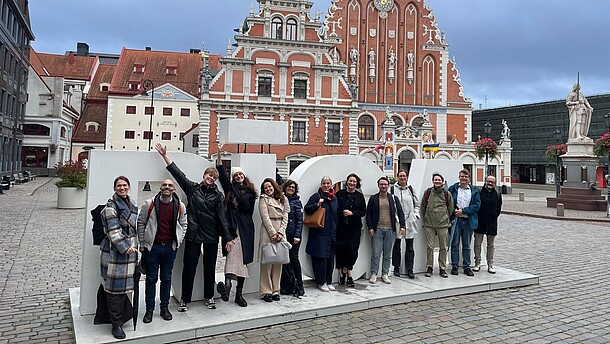



The two day conference brought together scholars, museum professionals and representatives from 43 institutions across 15 countries, creating a platform for exchange on how museums and memorial institutions present and reinterpret the history of the Second World War.
Drawing on conversations with colleagues across Europe, NEMO Secretary General Julia Pagel highlighted how deeply interconnected museum challenges have become - from war and restitution to digital transformation, sustainability, and representation. To help museums navigate these challenges and complexities, networks are essential: not only because they allow museums to share challenges and pool distributed knowledge, but because they are the grounds to nurture the trust needed to act collectively in times of crisis.
Furthermore she shared that experiences from recent years, from the pandemic to political pressure and ongoing conflicts, show us that in difficult moments, museums turn to one another. These connections and networks become lifelines: enabling fast reactions, meaningful collaboration, and joint advocacy. They change how we see the world, moving us beyond isolated perspectives towards more connected and multiperspective understandings of history and memory. In this sense, international cooperation is at the core of supporting museums to remain resilient, credible, and relevant - now and in the future.
The overall conference programme focused on key topics such as the rethinking of World War II narratives, particularly in post communist countries, the memorialisation of contemporary armed conflicts, and the role of museums in preserving historical memory in times of political instability. Discussions also addressed the challenges posed by the misuse of history for ideological purposes. Particular attention was given to the Ukrainian context, where museums are responding to the realities of ongoing war by developing new approaches to documenting and exhibiting conflict in real time.