



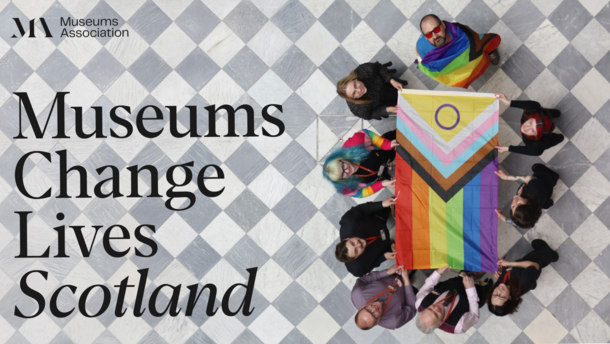
The UK Museums Association has published a new series of Museums Change Lives case studies showcasing how museums across Scotland are strengthening communities, addressing social challenges and creating lasting positive impact.
An ethical guide designed to support museums and memory institutions in working with Sámi photographic collections is now…

Museum professionals, educators, researchers, cultural and creative practitioners, civil society organisations, community groups, and policymakers from across Europe are invited to join the newly launched TOWCHED Network to…

From 10–13 May 2026, museum professionals from across Germany gathered in Münster for the annual conference of the German Museums Association, focusing on diversity and how museums can become more welcoming spaces for all. As part…

On 18 May 2026, NEMO will take part in the webinar “SPEAKING OUT: Strategic Communication to Promote Inclusive Narratives in Museums,” organised by ICOM COMMS. Taking place on the same day as International Museum Day 2026, the…
The German Museums Association has published a new guideline, “Museen in der Migrationsgesellschaft”, offering practical support…

The University of Leicester’s Research Centre for Museums and Galleries (RCMG) has developed six new practical resources to accompany its 2023 guidance “Trans‑Inclusive Culture.” The new resources cover topics such as briefing…
GEM – Group for Education in Museums recently published the 35th edition of its “GEM Case Studies” publication, developed in…
The practical resource “Culture for All: A Toolkit for Gender Equality in Policymaking” is designed to help policymakers and…