
NEMO Working Group gains insights in Denmark on energy, climate, and biodiversity

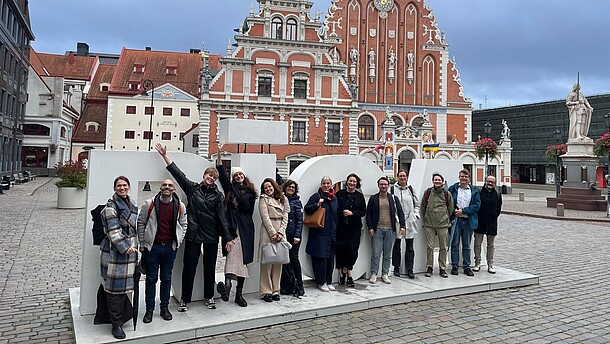
From 29–31 October 2025, members of NEMO’s Working Group on Sustainability and Climate Action (SAC) gathered in Denmark for a study visit organised by the Green Museum Academy of the Danish Museums Association.

The visit followed directly after the NEMO European Museum Conference in Horsens, with participants travelling together to explore innovative approaches to sustainability in Danish museums. After a conference focused on wellbeing and resilience, this three-day study visit of the NEMO Working Group on Sustainability and Climate Action offered valuable insights into energy-efficient storage, climate control strategies, biodiversity initiatives, and sustainable operations across a range of institutions.

Day 1: Low energy storage facility Vejle

The visit began at the Conservation Centre Vejle, where Bodil Klarskov Sylvester introduced participants to the principles behind low energy storage facilities. This state-of-the-art facility exemplifies how clearly defined building requirements and best practices can reduce energy consumption while safeguarding collections.

The presentation drew on research from Jesper Stub Johnsen and the background group for The Green Museum Academy’s report on low energy storage facilities, which is currently being translated from Danish into English.

Day 2: SMK – National Gallery of Denmark and Viking Ship Museum

On Thursday morning, the group visited SMK – National Gallery of Denmark in Copenhagen. Pil Rasmussen shared the museum’s work on climate control and the delicate balance between preserving artworks and creating meaningful visitor experiences. Thor Nørmark-Larsen explained how SMK uses loan agreements to promote broader climate parameters and reduce emissions through virtual couriers. These efforts align with international standards such as the Bizot Guidelines and ICOM-CC/IIC Environmental Guidelines.

The afternoon continued at the Viking Ship Museum in Roskilde, where Jesper Stub Johnsen, Johanne Østergaard, and Sebastian Løck discussed the challenges posed by rising water levels and the ambitious plans for a new, sustainable museum building. The visit highlighted the importance of collaboration between architects, engineers, and museum professionals in addressing climate adaptation.

Day 3: Louisiana Museum of Modern Art and Karen Blixen’s Home

Friday’s programme began at the Louisiana Museum of Modern Art, where Anette Hansen presented the museum’s sustainability strategy, guided by a double materiality assessment (DMA). The museum’s initiatives include reducing environmental impact of its café and shop, with measures such as removing beef and veal from the menu. Dennis Ernstsen, Louisiana’s restaurant manager, shared insights into sustainable menu planning, while Rasmus Bahnsen from the Green Academy provided an overview of sustainability through the lens of the Corporate Sustainability Reporting Directive (CSRD).

The study visit concluded at Karen Blixen’s Home – Rungstedlund, where Anne-Mette Høeg Andersen spoke about biodiversity efforts on the museum grounds. From maintaining a wild bird sanctuary to organising bioblitzes and bird ringing, the museum demonstrated how cultural heritage sites can actively contribute to ecological preservation.

Key takeaways

The study visit showcased the work of Danish museums in integrating sustainability into their practice. From energy-efficient storage and climate-conscious loan agreements to biodiversity and sustainable catering, the examples shared offer inspiration for museums across Europe.

Below follows a list provided by our excellent hosts at the Green Academy of the Danish Museums Association of some of the resources mentioned during the study visit: