On 7 November 2025, the one‑day conference Queering the Museum took place in Bologna, Italy, bringing together museum and cultural professionals, researchers and community representatives for a day of reflection, training and exchange on LGBTQIA+ inclusion in museums and cultural organisations.
The conference created space for open discussion on the challenges museums face when addressing queer inclusion, including political resistance and negative public reactions, while jointly exploring tools, recommendations and responses. As a co‑organiser, NEMO opened the day by introducing its guidelines on LGBTQIA+ Inclusion in European Museums, published in 2024. In the afternoon, participants engaged more deeply with the topic during a practical workshop facilitated by Rebecca Thonander (NEMO) and Arent Boon, author of the guidelines.
Have a look at the event recap.
The overall aim of the event was to strengthen dialogue between museums and LGBTQIA+ communities by questioning established institutional practices and offering concrete approaches for integrating queer perspectives into museum design, interpretation and heritage promotion. Participatory methods and strategies for navigating complex social and political contexts ran as a common thread throughout the programme.
Access presentations and resources for further reading via a LinkTree overview compiled by BAM! Strategie Culturali
Sharing knowledge and experience
The morning sessions, held in the Sala Farnese of Palazzo d’Accursio, opened with a plenary introducing key European resources on gender and LGBTQIA+ inclusion in museums. These included NEMO’s LGBTQIA+ Inclusion in European Museums, ICOM Italia’s Museums and Gender.
The second part of the morning focused on co‑design and collaboration with queer and identity communities in cultural heritage contexts. Drawing on contributions submitted through an open call, participants shared experiences from ongoing and completed projects. The session fostered collective reflection on challenges, opportunities and open questions, encouraging dialogue between practitioners, researchers and community representatives.
Why NEMO developed the guideline on LGBTQIA+ inclusion
NEMO’s Rebecca Thonander started by introducing NEMO – the Network of European Museum Organisations and the network’s motivation for developing the guideline, linking it to the organisation’s long‑standing commitment to supporting museums as relevant, trusted and socially responsible institutions. As spaces dedicated to learning, critical reflection and community engagement, museums have a responsibility to be welcoming and representative of the full diversity of society. Ensuring this social value, anchored in shared sector principles such as the ICOM museum definition, becomes especially important in times of political polarisation and growing pressure on cultural institutions.
In recent years, NEMO has observed increasing unease among museums across Europe when addressing queer representation and inclusion, driven in part by shifting political climates and resistance around so‑called “sensitive” topics. These concerns were later echoed in the findings of the NEMO Barometer on political influence in European museums, which identified political pressure, self‑censorship and interference affecting museums’ autonomy, including issues relating to LGBTQIA+ inclusion and representation. Against this backdrop, the guideline was conceived as a practical and ethical resource to support museums in navigating complex responses to queer inclusion thoughtfully, confidently and responsibly. By strengthening inclusion for communities that are particularly vulnerable to exclusion, NEMO’s broader aim is also to reinforce museums as open, brave and inclusive spaces for all.
Event recording
Please revisit the morning programme in the recording. Only subtitles in the same language as the spoken one are available but hopefully it can still be useful.
Workshops and practical exploration
In the afternoon, activities moved to the Medieval Civic Museum, where three thematic workshops offered hands‑on spaces to explore different methodological approaches to queer and identity‑based participation in museum practice.
NEMO’s workshop, “What would you do? Working through LGBTQIA+ inclusion dilemmas in museums”, invited participants to engage with real‑life scenarios drawn from the guideline. Situations such as responding to political hostility around queer exhibitions or introducing gender‑inclusive facilities encouraged participants to reflect on stakeholders, risks, possible outcomes and courses of action. The workshop aimed to strengthen confidence and decision‑making skills, helping participants translate values into practice and support queer inclusion in everyday museum work - even in challenging contexts.
Looking ahead
The day concluded with a wrap‑up session that brought together insights from across the programme and highlighted the importance of sustained, reflective and community‑centred approaches to inclusion. The conference underscored the value of peer exchange and cross‑sector collaboration in supporting museums as they work to become more inclusive, responsive and socially engaged institutions.
From words to images: A visual story of the day
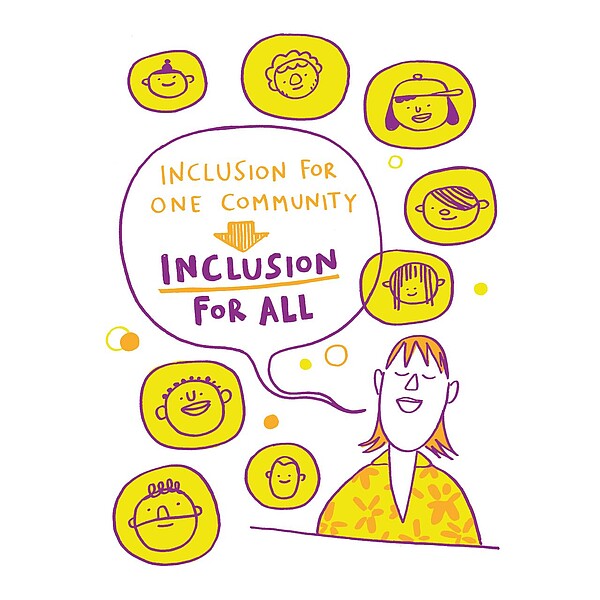
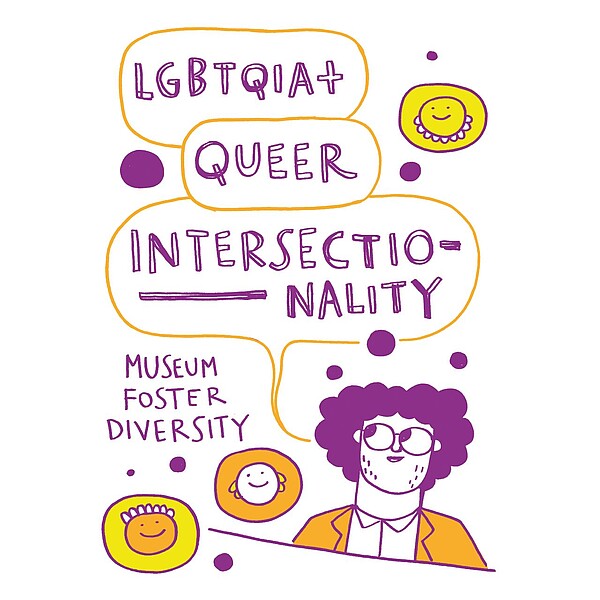
To capture the sense of community shaped throughout the event, a visual diary was created in collaboration with illustrator Gianluca Sturmann. The live drawings reflect key ideas from the morning sessions and afternoon workshops, while also portraying informal moments, interactions and atmospheres that contributed to the richness of the day.
Refined using the conference’s visual identity, the illustrations form a chronological narrative from the welcome to the closing workshops. With humour, colour and spontaneity, the diary offers an accessible, illustrated record of the day that participants and readers can return to long after the event.
Co‑creating queer inclusion in museums
Held under the patronage of ICOM Italia, the conference was organised through a collaboration between BAM! Strategie Culturali, NEMO – the Network of European Museum Organisations, the ICOM Italia Working Group on Gender and LGBTQ+ Rights, and the Civic Museums Sector of the Municipality of Bologna. The event formed part of the Gender Bender Festival, produced by the Cassero LGBTQIA+ Centre, which ran in Bologna from 30 October to 8 November 2025.